World Cup 2026
with Kids
Yes, World Cup 2026 is an excellent family experience! All stadiums feature family sections, baby changing facilities, and accommodations for children of every age. Here's your complete guide to planning an unforgettable family adventure across the USA, Canada, and Mexico.
Updated February 5, 2026 · KickoffAdventures Editorial Team

At a Glance
- Perfect ages: 9-12 years old
- Baby in arms free (under 2, under 34")
- All stadiums have family sections
- Top family cities: Toronto, Boston, Vancouver
- Budget: $2,660–$3,340 per person (10 days)
Last updated: February 5, 2026
Pro Tip
Book hotels with pools! 1-2 hours of afternoon pool time = rest & recharge for both kids and parents.
Thousands of families attend every World Cup, and the 2026 tournament across the USA, Canada, and Mexico offers exceptional family-friendly infrastructure, safe cities, and activities for all ages. All children need their own tickets unless they qualify as "baby in arms" (under age 2 and under 34 inches tall, sitting on a parent's lap).
Here's everything you need to know to plan an unforgettable family World Cup adventure—from choosing the best cities to stadium survival tactics and real budgets.
What Makes 2026 Special for Families
- Multiple countries = cultural education across three nations in one trip
- Summer timing = no school conflicts (June 11–July 19, 2026)
- Modern stadiums with world-class facilities built for comfort
- 16 host cities with diverse attractions for all interests
On This Page
Is World Cup 2026 Right for Your Family? Age & Interest Guide
The "right age" depends on your family's travel experience and kids' temperament. Here's an honest breakdown of what to expect at each age range.
Ages 0-4 (Toddlers & Babies)
Doable but challenging
Pros
- ✓Free admission if "baby in arms" (under age 2, under 34 inches, sitting on lap)
- ✓Formula and baby food allowed in stadiums
- ✓All stadiums have family restrooms with changing tables
- ✓Memorable photos (even if they won't remember!)
Cons
- ✗Won't remember the experience
- ✗Nap schedules conflict with game times
- ✗Crowd noise may be overwhelming (stadiums reach 100–130 decibels)
- ✗Stroller storage required at security (can't bring inside most stadiums)
Verdict: Best for experienced family travelers comfortable navigating large crowds with infants. Bring baby carrier instead of stroller.
Ages 5-8 (Young Kids)
Great age for the experience!
Pros
- ✓Will remember the experience
- ✓Can enjoy stadium atmosphere and fan culture
- ✓Kid-friendly activities in all host cities
- ✓Growing interest in sports (even if they don't fully understand rules)
Cons
- ✗May not understand soccer strategy
- ✗Attention span for 90+ minute games limited
- ✗Potential overstimulation in crowds of 60,000+
Verdict: Focus on group stage games (shorter, less intense). Bring activities for halftime and pack noise-canceling headphones.
Ages 9-12 (Tweens)IDEAL AGE
The sweet spot for World Cup!
Pros
- ✓Ideal age – old enough to appreciate, young enough to be excited
- ✓Understands the game and can follow play
- ✓Can participate in fan culture (chants, jerseys, face paint)
- ✓Educational opportunity (geography, culture, teamwork, sportsmanship)
Minor Concerns
- ⚠May be picky about food/accommodations
- ⚠Can get tired from long walking days (5+ miles typical)
Verdict: PERFECT AGE FOR WORLD CUP. Kids are engaged, manageable, and will cherish the memory for life.
Ages 13-17 (Teens)
Excellent bonding experience
Pros
- ✓Can handle full itinerary without constant supervision
- ✓Likely already soccer fans with favorite teams/players
- ✓Great bonding experience before college
- ✓Independence to explore host cities (with boundaries)
Cons
- ✗May prefer traveling with friends over parents
- ✗Adult ticket prices (no youth discounts for ages 16+)
Verdict: Excellent family trip. Let them help plan itinerary and give them some freedom to explore with clear check-in times.
Pro Tip: Build Excitement Before the Trip
If your kids aren't soccer fans yet, watch World Cup documentaries together. Netflix titles like Becoming Champions or ESPN+ highlight reels of famous goals work great. Show them Messi, Ronaldo, or USMNT highlights to spark interest.
Best Family-Friendly Host Cities for World Cup 2026
Not all host cities are created equal for families. Here are the top picks based on safety, walkability, kid-friendly attractions, weather, and overall logistics.
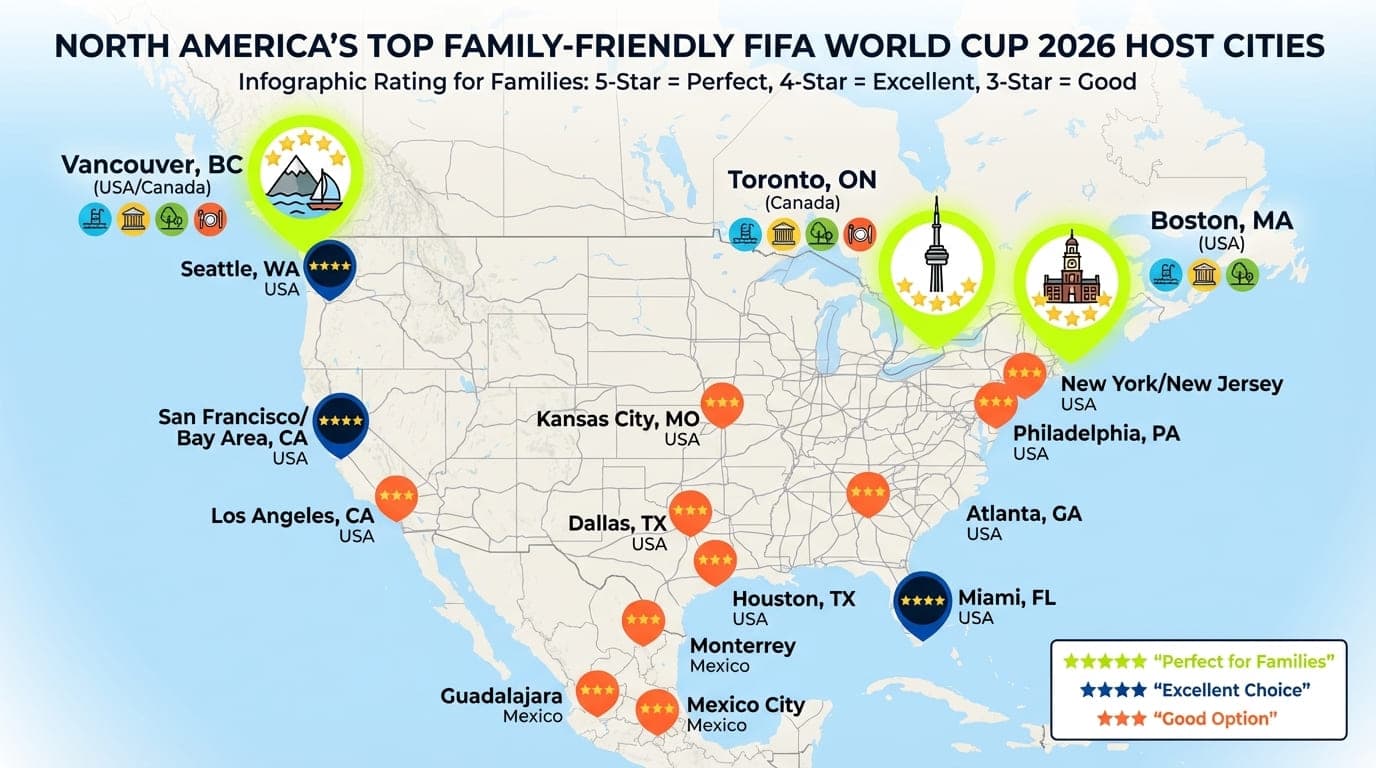
Top 5 Cities for Families
#1: Toronto, Canada
Perfect urban + easy logistics
Why it's great:
- Downtown BMO Field location (no long stadium commute)
- Top family attractions: CN Tower, Ripley's Aquarium, Royal Ontario Museum, Toronto Zoo
- Lakefront parks and Harbourfront Centre (free outdoor spaces)
- Extremely safe, clean, walkable with excellent public transit
- English-speaking, easy navigation for Americans
Quick Facts:
- Stadium:
- BMO Field (30,000)
- Best for:
- Urban culture + easy logistics
- Family budget:
- $$ (moderate)
- Weather:
- 70–80°F (perfect summer)
#2: Boston, Massachusetts
Culture + sports + American history
Why it's great:
- Walkable city with world-class public transit (MBTA "T")
- Top family attractions: New England Aquarium, Museum of Science, Boston Children's Museum, Fenway Park
- Educational history (Freedom Trail, USS Constitution)
- Safe, family-oriented neighborhoods (Cambridge, Back Bay)
Quick Facts:
- Stadium:
- Gillette (45 min south)
- Best for:
- Education + culture + sports
- Family budget:
- $$$ (higher but worth it)
- Weather:
- 75–85°F
Note: Stadium has clear bag policy (12" × 6" × 12" max) with locker rentals available.
#3: Vancouver, Canada
Outdoor adventures + mild weather
Why it's great:
- Stunning outdoor activities: Stanley Park bike rentals, beaches, Capilano Suspension Bridge
- Top family attractions: Vancouver Aquarium, Science World, Grouse Mountain
- Mild summer weather (70–75°F, rarely above 80°F)
- Very safe, clean, cosmopolitan city with easy access to nature
Quick Facts:
- Stadium:
- BC Place (downtown)
- Best for:
- Active families + outdoors
- Family budget:
- $$ (moderate)
- Weather:
- Most comfortable climate
#4: Miami, Florida
Beach vacation + World Cup combo
Why it's great:
- Beach vacation + World Cup in one trip
- Top family attractions: Miami Seaquarium, Zoo Miami, Jungle Island, Vizcaya Museum
- Theme parks within 3.5 hours (Orlando: Disney, Universal)
- Diverse food options (picky eaters can find familiar foods)
Quick Facts:
- Stadium:
- Hard Rock (30 min north)
- Best for:
- Beach + soccer combo
- Family budget:
- $$ (moderate)
- Weather:
- 85–90°F, high humidity
Tip: Plan indoor AC breaks. Hard Rock Stadium has family restrooms at Sections 118, 144, 217, 244 with changing tables.
#5: Seattle, Washington
Pacific Northwest nature + culture
Why it's great:
- Top family attractions: Space Needle, Pike Place Market, Seattle Aquarium, Woodland Park Zoo
- Ferry rides to islands (Bainbridge, Vashon)
- Cooler summer weather (65–75°F, great for heat-sensitive kids)
- Safe, walkable downtown with light rail to stadium
Quick Facts:
- Stadium:
- Lumen Field (downtown)
- Best for:
- Cooler weather + nature
- Family budget:
- $$ (moderate to expensive)
- Weather:
- 65–75°F
Other Great Family Options
San Francisco Bay Area
Golden Gate Bridge, Alcatraz, Exploratorium, cable cars. Mild weather (60–70°F). Stadium: Levi's in Santa Clara.
Dallas/Arlington
Six Flags, Fort Worth Stockyards, Dallas Zoo. Warning: Extreme heat (120°F+ heat index). Attend early/late games only.
Cities to Approach with Caution (But Still Doable)
Mexico City ⚠️
Pros: Incredible culture, Papalote Children's Museum, National Museum of Anthropology, amazing food.
Cons: High altitude (7,350 ft) – kids may struggle with shortness of breath, fatigue, headaches. Water safety concerns (drink only bottled water).
Recommendation: Great for adventurous families with older kids (10+). Arrive 2–3 days early to acclimate to altitude.
New York/New Jersey ⚠️
Cons: Very expensive (hotels $300–500/night minimum). Crowded and overwhelming for young kids. MetLife Stadium is far from Manhattan (1+ hour).
Recommendation: Best for families with teens who can handle fast pace. Budget $500+/day for family of 4.
Monterrey, Mexico ⚠️
Cons: Extreme heat risk (120°F+ heat index in July). Water safety.
Recommendation: Not recommended for families with young kids unless attending evening matches only. Heat exhaustion risk is very high.
Stadium Survival Guide: Attending Games with Kids
The difference between a magical family memory and a stressful disaster often comes down to preparation. Here's what experienced parents wish they'd known before their first World Cup match.
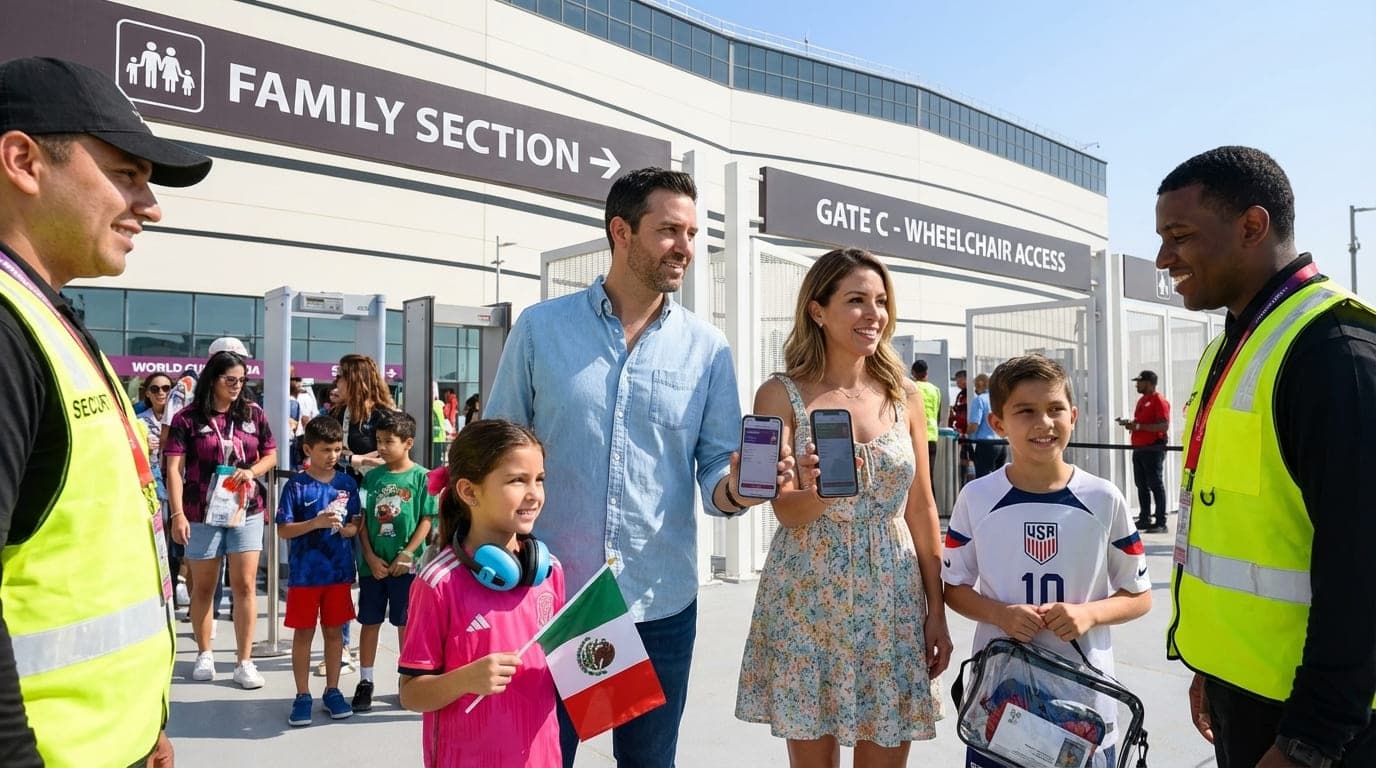
Pre-Game Preparation
Choosing the Right Match
✅ Best Choices:
- •Group stage games (lower intensity, less crowded)
- •Daytime or early evening games (easier for bedtimes)
- •Teams with family-friendly fan cultures: Costa Rica, Japan, Australia, USA, Canada
❌ Avoid:
- •Late-night knockout games (10pm+ starts)
- •Intense rivalries (USA vs. Mexico can be rowdy)
- •Quarterfinals+ (higher prices, louder crowds)
Ticket Selection Tips
Family sections
FIFA designates family zones with alcohol-free seating and monitored behavior. Request during ticket purchase.
Category 3 or 4 seats
Better value, fewer intoxicated fans in upper sections, still excellent views in modern stadiums.
Aisle seats
Easy bathroom access (critical with kids). Worth the extra effort to request.
Avoid supporters sections
Loud, rowdy, heavy alcohol consumption. Not appropriate for children.
Pro tip: Children under 16 must be accompanied by an adult 18+. Plan your seating accordingly if traveling with multiple families.
Strollers, Car Seats & Baby Gear
Stroller Policy (varies by stadium)
Most stadiums allow strollers but must be checked/stored at security. You cannot bring strollers into seating areas.
✓ Recommended Solution:
Use baby carrier (Ergobaby, BabyBjörn, Tula) instead for hands-free mobility. Much easier for navigating crowds and stairs.
If toddler needs stroller: Bring lightweight umbrella stroller. Expect to check it at gate for $10–15 fee (Binbox locker stations).
Prohibited: Stroller wagons, wheeled footwear (Heelys).
Baby Changing Facilities
- All 16 stadiums have family restrooms with changing tables
- Companion care restrooms (for dads with daughters, moms with sons)
Pro tip: Change before game and at halftime (avoid post-game rush). Bring portable changing pad as backup.
Example locations:
- • Hard Rock Stadium (Miami): Sections 118, 144, 217, 244
- • Check individual stadium pages for other venues
Diaper Bag Policy
Clear bag policy (max 12" × 6" × 12") enforced at all stadiums.
✅ Allowed:
- • Diapers, wipes, snacks for kids
- • Formula, breast milk, baby food (sealed)
- • Medicine, first aid supplies
- • Small clutch bag (4.5" × 6.5" × 2")
❌ Not Allowed:
- • Non-clear bags over size limit
- • Backpacks
- • Camera bags
- • Large purses
Reminder: Pack light – you'll be walking 1+ miles from parking/transit to seats.
Stadium Food & Snacks
What's Available
Standard options:
- • Hot dogs, burgers, pizza
- • Chicken tenders, fries
- • Popcorn, pretzels, nachos
Healthier choices:
- • Fruit cups, veggie wraps
- • Grilled chicken sandwiches
- • Vegetarian/vegan options
Prices: Expect $10–15 per item (stadium markup). International flavors: Mexican food in Mexico City, poutine in Canada.
Can You Bring Outside Food?
Policy varies by stadium:
- Generally allowed: Small snacks for kids (goldfish crackers, fruit pouches, granola bars)
- Always allowed: Formula, breast milk, baby food
- Usually prohibited: Full meals, outside beverages (except sealed water bottles at some venues)
Check specific stadium policies on our Stadium Pages.
Dealing with Picky Eaters
- 1Feed kids a good meal 2–3 hours before game
- 2Bring familiar snacks (goldfish, crackers, fruit)
- 3Most stadiums have plain options (plain hot dog, fries)
- 4Pack allergy-safe foods if needed (contact guest services 48+ hours ahead)
Managing the Game Experience
Keeping Kids Engaged
Most exciting – kids will be thrilled by atmosphere, crowd noise, player intros
Walk concourse, visit team store, bathroom break, stretch legs, get snacks
Bring quiet activities (coloring book, small toy, tablet with headphones)
Make it special – high fives, dance together, take photos. Create the memory!
Pro tip: Make a game of it – count passes, guess who will score, spot flags from different countries in the crowd.
Noise Management (CRITICAL)
Stadium noise reaches 100–130 decibels – louder than lawnmowers (90 dB) and chainsaws (100 dB).
Health risk: Exposure above 100 dB causes hearing damage in just 15 minutes, especially for children.
Bring:
- Kids' noise-canceling headphones or foam earplugs (non-negotiable!)
- →Recommended: Puro Sound Labs kids headphones (safe volume limiting)
- →Budget option: 3M foam earplugs (NRR 32dB, $5 at drugstores)
Don't skip this: Permanent hearing damage in children is irreversible. Pack headphones with your tickets and phone.
Sun Protection
Daytime games = brutal sun in upper decks. Risk: Heat exhaustion, sunburn (especially at southern venues).
Bring:
- • Sunscreen (SPF 50+), reapply every 2 hours
- • Hats, sunglasses for everyone
- • Light, breathable clothing
- • Refillable water bottles
Strategy:
- • Choose seats on shaded side of stadium
- • Attend evening matches (6pm+ kickoffs)
- • Take midday AC breaks in concourse
Bathroom Strategy
Problem: Halftime bathroom lines can be 20+ minutes long.
Strategy:
- 1.Go BEFORE game starts (15–20 min before kickoff)
- 2.Go at 30th minute mark (lines shorter mid-half)
- 3.Bring hand sanitizer (backup for long lines)
- 4.Scout family restroom locations upon arrival
Safety & Crowd Management
Lost Child Prevention (CRITICAL)
Before arrival:
- Write your phone number on child's arm (in pen)
- Take photo of child each morning (shows what they're wearing)
- Establish meeting point near main entrance if separated
- Pre-talk: "If you get lost, find a stadium worker in yellow vest or police officer"
At stadium:
- • Hold hands in tight crowds
- • Use child harness/leash for wandering toddlers (no shame!)
- • Dress kids in bright colors (easy to spot)
Stadium protocols: All stadiums have lost child reunification centers and staff trained in child safety procedures.
Child registration: Some stadiums offer wristband registration on arrival with parent's phone number.
Crowd Navigation
- Arrive 90+ minutes early (avoid crush at gates; kids move slower)
- Leave 10 minutes before final whistle (miss traffic/crowds)
- Hold hands or link arms in dense crowds
- Avoid rush immediately after game (wait 15 min for crowds to disperse)
Activities for Kids Between Games
World Cup is more than just games. Balance match days with cultural exploration, outdoor adventures, and downtime to prevent burnout.
Educational Experiences
Top Family Museums by City
Boston:
- • Museum of Science
- • New England Aquarium
- • Boston Children's Museum
Miami:
- • Frost Science Museum
- • Zoo Miami
- • Vizcaya Museum
Vancouver:
- • Science World
- • Vancouver Aquarium
- • Capilano Suspension Bridge
Toronto:
- • Royal Ontario Museum
- • Ripley's Aquarium
- • Ontario Science Centre
Seattle:
- • Pacific Science Center
- • Woodland Park Zoo
- • Museum of Flight
Mexico City:
- • Papalote Children's Museum
- • National Museum of Anthropology
- • Xochimilco canals
Cultural Immersion
- •Try local foods (make it a game: "who can try the weirdest food?")
- •Learn basic phrases in Spanish (Mexico) or French (Montreal)
- •Visit FIFA Fan Fest (free, family-friendly, live music, food vendors)
- •Collect flags/pins from different countries (trade with other fans)
Outdoor Adventures
Vancouver:
Stanley Park (bike rentals, beaches, seawall walk)
Boston:
Boston Common, Charles River Esplanade (kayaking)
San Francisco:
Golden Gate Park, Exploratorium
Seattle:
Discovery Park, ferry to Bainbridge Island
Miami:
South Beach, Key Biscayne (snorkeling)
Los Angeles:
Santa Monica Pier, Manhattan Beach
Downtime & Rest (Don't Skip This!)
Hotel Pool Time
Non-negotiable for families: Book hotels with pools.
Schedule: 1–2 hours mid-afternoon = rest & recharge
Benefits: Kids burn energy, parents relax, escape heat
Movie Afternoons
If kids are exhausted, catch a movie (AC + quiet + rest). Many stadiums near shopping centers with theaters.
Flexibility is Key
- • Don't overschedule (leads to meltdowns)
- • Plan 1 major activity + 1 game per day MAX
- • Build in rest days (no games, just explore at leisure)
- • Let kids vote on activities (increases engagement)
Family Budget Planning: What It Really Costs
No sugarcoating: World Cup is expensive. But with smart planning, it's achievable for middle-class families. Here's a realistic budget breakdown.
Sample Family Budget (Family of 4: 2 adults, 2 kids ages 8 & 12)
10-Day Trip: 3 Cities, 4 Games
| Expense | Cost | Notes |
|---|---|---|
| Flights (roundtrip for 4) | $2,400 | From domestic US city |
| Hotels (9 nights, mid-range) | $2,250 | $250/night average |
| World Cup Tickets (4 games × 4 people) | $2,240–$4,960 | Cat 3/4 group stage ($140–310 each) |
| Inter-city travel | $800 | 2 domestic flights between cities |
| Food (10 days × 4 people) | $1,500 | $150/day ($37.50 per person) |
| Activities (museums, attractions) | $600 | $60/day |
| Stadium parking/transport | $200 | $50 per game day |
| Souvenirs & merchandise | $300 | Jerseys, scarves, memorabilia |
| Miscellaneous | $350 | Snacks, tips, unexpected costs |
| TOTAL | $10,640–$13,360 | ~$2,660–$3,340 per person |
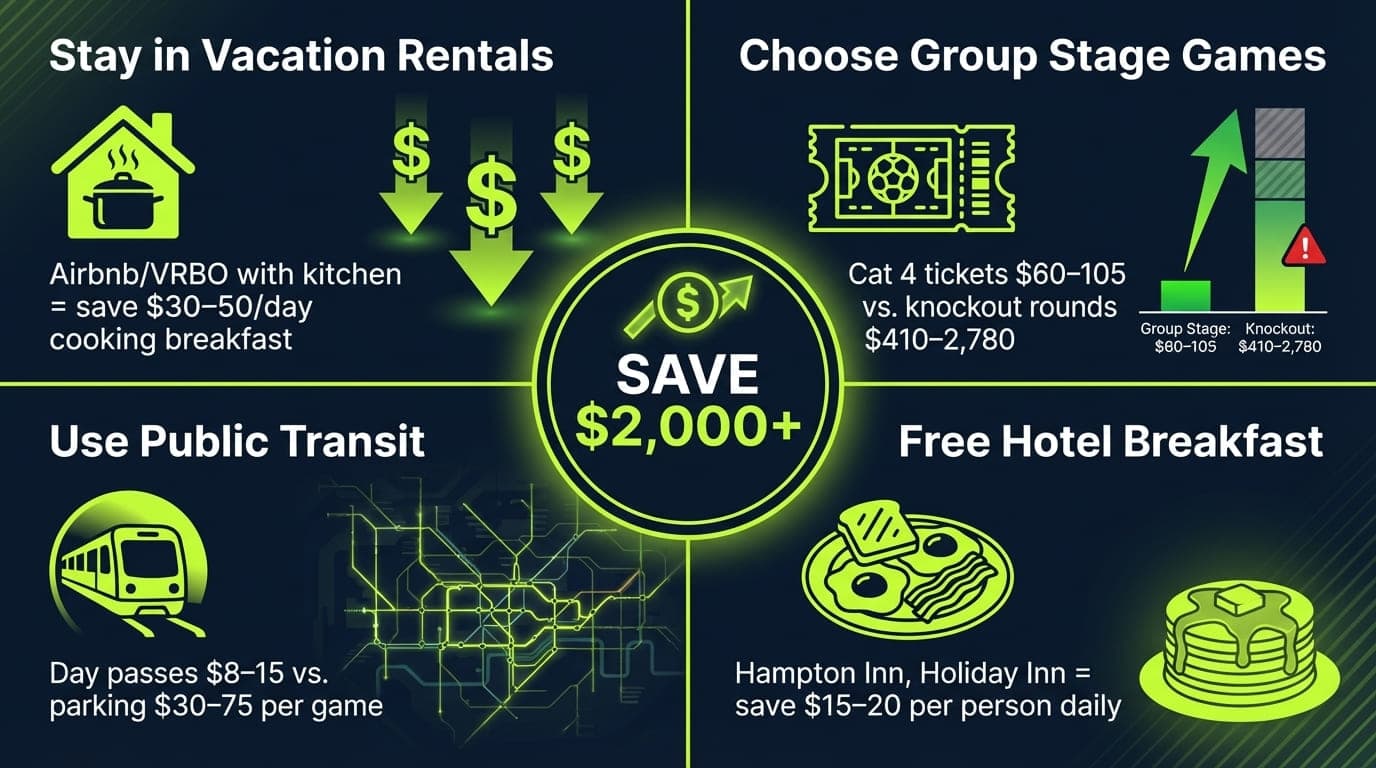
Money-Saving Tips for Families
Accommodations
- Vacation rentals (Airbnb/VRBO) with kitchens – cook breakfast, save $30–50/day
- Stay outside city center (use public transit to save $100+/night)
- "Kids stay free" chains: Hampton Inn, Holiday Inn Express, Hilton brands
- Book early (6+ months ahead for best rates)
Food
- Free hotel breakfast (Hampton, Holiday Inn Express)
- Pack snacks for game days (stadium food = $10–15 per item)
- Lunch at food trucks/casual spots ($10–15), splurge on dinner
- Grocery store trips for sandwich supplies, fruit, drinks
Tickets
- Apply for less popular matches (non-USA/Mexico games)
- Choose Category 4 seats ($60–105 group stage) – kids won't care about view
- Attend 2–3 games instead of 5+ (quality over quantity)
- Avoid knockout rounds (prices jump to $410–2,780)
Activities
- Free city walking tours (tip-based)
- Parks, beaches, public spaces (free!)
- FIFA Fan Fest (free admission, entertainment, food vendors)
- City tourism passes (Boston CityPASS, NYC Explorer Pass)
Packing Essentials for Family World Cup Trip
Don't overpack, but don't forget the essentials. Here's what you actually need.
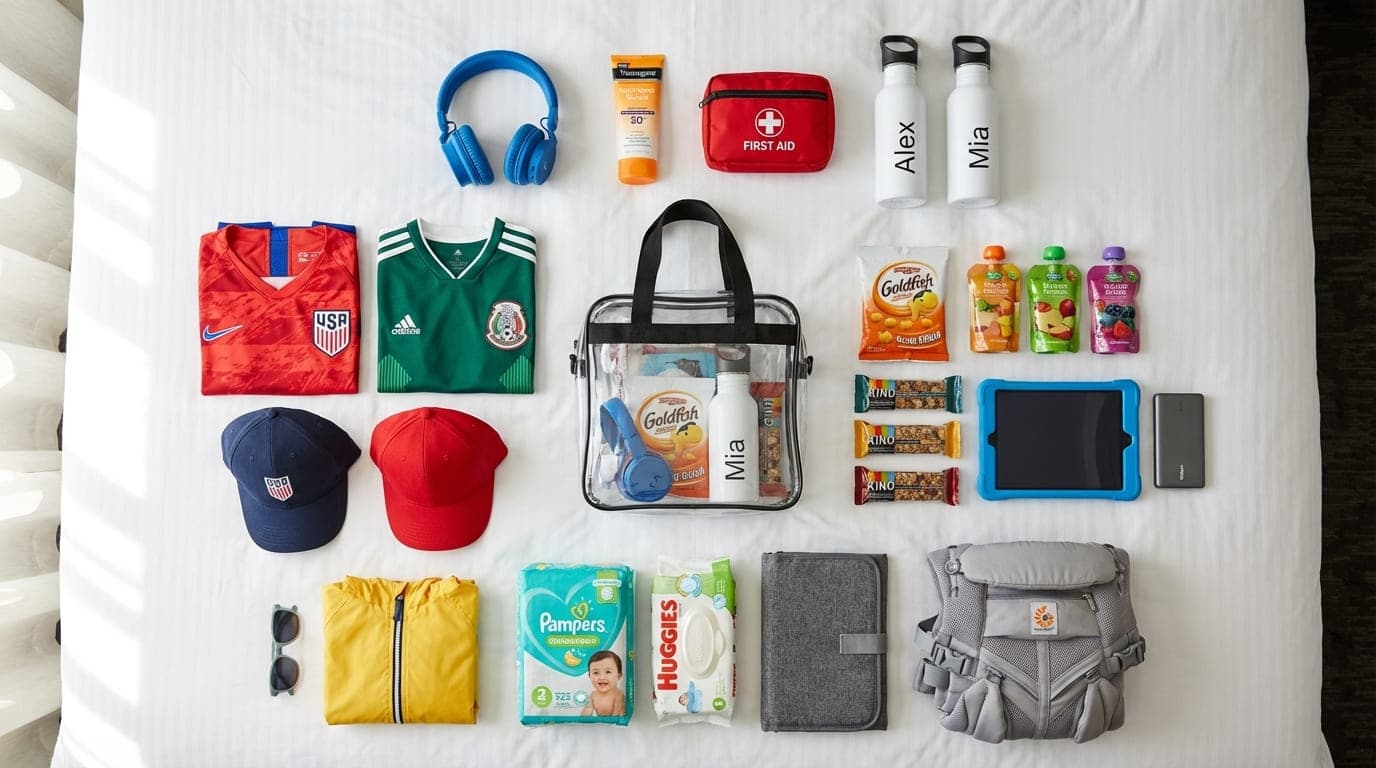
For the Stadium
- Kids' headphones (noise protection – essential!)
- Sunscreen (SPF 50+), hats, sunglasses
- Light rain jacket (summer storms common)
- Small binoculars (if upper deck seats)
- Phone charger/power bank
- Snacks (if allowed – check stadium policy)
- Hand sanitizer & wet wipes
- Clear bag (12" × 6" × 12" max)
For Toddlers/Babies
- Baby carrier (instead of stroller)
- Diapers + wipes (more than you think! 10+ for game day)
- Formula/baby food in sealed containers
- Pacifiers, comfort items
- Change of clothes (blowouts happen)
- Portable changing pad
For Kids Age 5+
- Comfortable walking shoes (you'll walk 5+ miles/day)
- Team jersey or colors (for photos + fan experience)
- Small backpack (for their own snacks/toys)
- Tablet/iPad with downloaded shows (downtime, travel)
- Travel games (cards, portable board games)
- Water bottle (refillable)
Safety Items
- First aid kit (band-aids, pain reliever, anti-diarrheal)
- Prescription medications (bring extras)
- Copy of passports/IDs (separate from originals)
- Travel insurance documentation
- Emergency contact card (hotel address, phone numbers)
Health & Safety Tips for Traveling Families
Before You Go
Medical Preparation
- • Schedule pediatrician visit 4–6 weeks before trip
- • Update vaccinations (routine + travel-specific for Mexico)
- • Get prescriptions refilled (bring 2× what you need)
- • Research pediatric urgent care in each host city
Travel Insurance
Highly recommended for families
- Coverage: Trip cancellation, medical emergencies, lost luggage, evacuation
- Providers: Allianz, World Nomads, IMG Global
- Cost: ~$200–300 for family of 4 (10-day trip)
Food & Water Safety
USA & Canada
- Tap water safe to drink everywhere
- Food safety standards high
- Minimal concerns
Mexico
- Drink bottled water only (especially for kids)
- Avoid ice cubes (made from tap water)
- Street food: Choose busy vendors (high turnover = fresh food)
- Resort/hotel restaurants generally very safe
- Bottled water widely available (OXXO stores, Walmart)
Avoid: Tap water (even for brushing teeth), unpasteurized dairy, raw fruits/vegetables unless you peel them.
Tip: Bring Pedialyte packets in case of stomach issues. Available at pharmacies in all cities.
Sun & Heat Safety
Summer Weather
- • USA: 75–95°F (varies by city)
- • Mexico: 80–90°F + high humidity
- • Canada: 70–80°F (most comfortable)
- • Extreme heat risk: Arlington, Houston, Monterrey (120°F+ heat index)
Preventing Heat Exhaustion
- • Hydrate constantly (water bottle at all times)
- • Take midday breaks (11am–3pm = hottest hours)
- • Dress in light, breathable clothing
- • Use sunscreen every 2 hours
- • Seek AC breaks (museums, malls, hotels)
Signs of Heat Exhaustion in Kids
Extreme thirst, dizziness, nausea, flushed skin, rapid heartbeat, fatigue, confusion
Action: Move to shade, drink water, cool with wet cloth, seek medical help if symptoms persist.
Making It Educational: World Cup as a Learning Experience
World Cup isn't just entertainment—it's a once-in-a-lifetime geography, culture, and life skills lesson.
Geography Lessons
Before the Trip:
- • Study world map – find each team's home country
- • Learn capitals, flags, basic facts
- • Watch cultural videos (food, traditions, landmarks)
During the Trip:
- • Collect flags/pins from different countries
- • Talk to fans from around the world
- • Try foods from different cultures
- • Track teams on map as they advance
After the Trip:
- • Create scrapbook with tickets, photos, souvenirs
- • Write about experience (school project!)
- • Stay connected to favorite teams/players
- • Follow 2030 World Cup
Life Skills Development
Cultural Awareness:
- • Exposure to different languages, customs, traditions
- • Seeing global community come together peacefully
- • Understanding sportsmanship and respect
Travel Skills:
- • Navigating airports, trains, public transit
- • Reading maps, following directions
- • Adapting to new environments, trying new foods
Teamwork & Passion:
- • Watching athletes at peak performance
- • Understanding dedication and hard work
- • Experiencing collective joy (or disappointment!)
- • Building family memories forever
🎓 Teacher's Note: Many schools approve World Cup trips as educational leave. Provide a "learning plan" showing geography, cultural, and language learning objectives. Ask for homework in advance to stay on track academically.
Real Family Stories: What Parents Say
Sarah M., Boston
Attended 2018 World Cup with kids ages 10, 13
"Best family vacation ever! My kids still talk about it 7 years later. Yes, it was expensive, but seeing their faces when we walked into the stadium... priceless. They learned more about geography and culture in 2 weeks than a year of school. We chose Moscow and St. Petersburg – safe cities with incredible history. My advice: don't try to see too many matches. We did 3 games over 10 days and had time to explore."
Carlos R., Houston
Attended 2014 World Cup in Brazil with son age 8
"We focused on just 2 cities (Rio and São Paulo) and 3 games. Didn't try to do too much. The key was balancing game days with rest days. My son loved the fan atmosphere almost as much as the games themselves. He still wears his Brazil jersey! One mistake: we sat in cheap seats and got soaked in rain. Spend a bit more for covered seats if possible."
Jennifer K., Vancouver
Planning 2026 trip with kids ages 5, 7, 11
"I was nervous about bringing our 5-year-old, but after reading family guides and talking to other parents, I feel confident. We're choosing daytime group stage games and staying in family-friendly Vancouver and Toronto. Skipping Mexico due to altitude concerns. Can't wait! Already teaching the kids about different countries."
FAQ: 12 Family Travel Questions Answered
Your Family World Cup Action Plan
6+ Months Before
- Apply for tickets (Phase 3 closes Jan 13, 2026)
- Book flights and hotels (prices increase closer to tournament)
- Apply for passports/visas if needed (especially Mexico)
- Purchase travel insurance
- Start teaching kids about World Cup, teams, countries
3 Months Before
- Book inter-city transportation (trains, flights between host cities)
- Research kid-friendly restaurants and activities
- Plan rest days and downtime
- Buy kids' headphones, sun gear, comfortable shoes
- Schedule pediatrician visit (update vaccinations)
1 Month Before
- Finalize daily itinerary (don't overschedule!)
- Download stadium apps, city transit apps
- Pack clear bags, portable chargers
- Make restaurant reservations for nice dinners
- Create emergency contact card
1 Week Before
- Confirm all reservations (hotels, flights, activities)
- Check weather forecast, adjust packing
- Download offline maps (Google Maps, Citymapper)
- Review lost child safety plan with kids
- Pack first aid kit, medications
Day Before Game
- Charge all devices (phones, tablets, power banks) to 100%
- Pack clear bag with stadium essentials
- Prep snacks, refill water bottles
- Review stadium map, parking/transit options
- Early bedtime for kids!
Ready to Create Lifelong Memories?
Download our printable Family World Cup Checklist and never miss a step.
Explore More Guides→On This Page
Related Guides
Quick Tips
- ✓Book hotels with pools (non-negotiable)
- ✓Bring kids' headphones for noise
- ✓Don't overschedule (1 activity + 1 game max/day)
- ✓Write phone number on kids' arms
- ✓Ages 9-12 = ideal for World Cup